


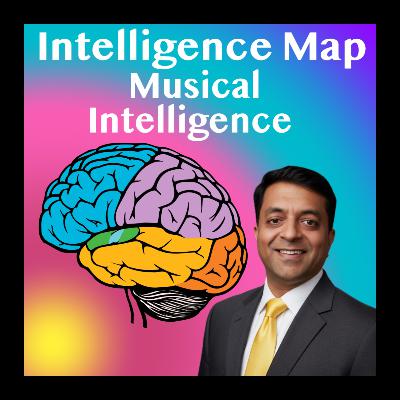
Musical Intelligence - The 9 Types of Human Intelligence | Education Reform Series
Description
Good morning wonderful people — especially those joining from my LinkedIn newsletter.
Today I’m beginning a powerful, eye-opening series on the Nine Types of Intelligence proposed by Howard Gardner (Frames of Mind, 1983) — and why this model is far more accurate, humane and future-ready than our outdated obsession with “IQ scores” and STEM-only measures.
We keep talking about Artificial Intelligence, but I feel we haven’t even understood Human Intelligence properly.
So let’s get the fundamentals right.
Today we begin with Musical Intelligence — not as talent, but as a cognitive style, a brain orientation, and a pattern-based learning architecture that shapes how a child thinks, learns, remembers, empathizes, and even detects truth from tone.
This episode isn't just for parents.
It’s for psychologists, child-counsellors, educators, school leaders, curriculum designers, special-education practitioners, and every young adult trying to understand their cognitive identity.
🎼 What You’ll Learn in This Video
In this foundational episode, I walk you through:
🔹 What Musical Intelligence Actually Is (Beyond Talent)
You’ll understand how this form of intelligence processes the world through rhythm, vibration, tone, cadence, sound-mapping, pattern-tracking and resonance — a cognitive architecture reflected clearly in my Project files under Musical Intelligence traits .
🔹 How to Identify Musical Intelligence in Children
tapping rhythms on tables and toys
uncanny mimicry of sounds
rapid language absorption
using rhythm to self-soothe
detecting emotional tone faster than adults
pattern-matching in sound, speech, movement, numbers
🔹 How This Intelligence Shows Up in Young Adults
intuitive pattern recognition
fast auditory processing
beat-based memory
tone-sensitive communication
strong sensory intuition
flow-oriented environments (Zumba, movement-music learning)
🔹 How Schools Can Nurture It
I walk you through practical, neuroscience-aligned interventions:
rhythm blocks, sound mapping
cadence-based language teaching
body-percussion activities
visual-auditory pattern charts
echo-response exercises
environment sound awareness
pattern-integrated math and science
(All fully aligned to the support strategies listed in the Musical Intelligence section of your core document .)
🔹 Why the Future Belongs to Pattern-Based, Sensory-Rich Thinkers
Musical-intelligence dominant people excel in:
innovation
high-speed recall
emotional intelligence
collaboration
empathetic leadership
language learning
design-thinking
sensory-driven problem-solving
This is future-ready cognition — the kind our new generation is being born with.
🌟 Why This Series Matters
If you’re a psychologist, educator or parent, you’ll immediately see why these nine intelligences must replace outdated IQ-only assessments.
If you’re a student or young adult, you’ll finally understand why you think differently — and why it’s a strength.
Once we complete all nine types, I’ll bridge this series with deeper insights from Vedic Astrology and the cognitive signatures seen in natal charts, with files available on the Google Drive for those following my LinkedIn newsletter.
#MusicalIntelligence #MultipleIntelligences #HowardGardner #ChildPsychology #EducationReform #LearningScience #CognitiveDevelopment #PatternRecognition #FutureOfEducation #ParentsAndTeachers #PsychologyCommunity #Neurodiversity #HolisticLearning #EarlyChildhoodEducation #EmotionalIntelligence





 United States
